


Actualités de l'industrie
 Maison / Nouvelles / Actualités de l'industrie / What Factors Should Be Considered When Selecting Filter Press Plates for Sludge Dewatering?
 What Factors Should Be Considered When Selecting Filter Press Plates for Sludge Dewatering?
 2026.06.22
 Actualités de l'industrie
Sludge dewatering is a critical process in wastewater treatment, mining, chemical production, food processing, and many other industrial applications. While the filter press itself plays an important role in achieving effective solid-liquid separation, the performance of the system largely depends on the quality and suitability of the filter press plates. Selecting the right filter press plates can improve filtration efficiency, increase cake dryness, reduce operating costs, and extend equipment service life.
Understanding the key factors involved in filter press plate selection helps operators and plant managers achieve optimal dewatering performance while maximizing their return on investment.
How Does Plate Type Affect Sludge Dewatering Performance?
One of the first considerations when selecting filter press plates is the plate design. Different plate types are engineered for specific filtration requirements and sludge characteristics.
Chamber Filter Press Plates
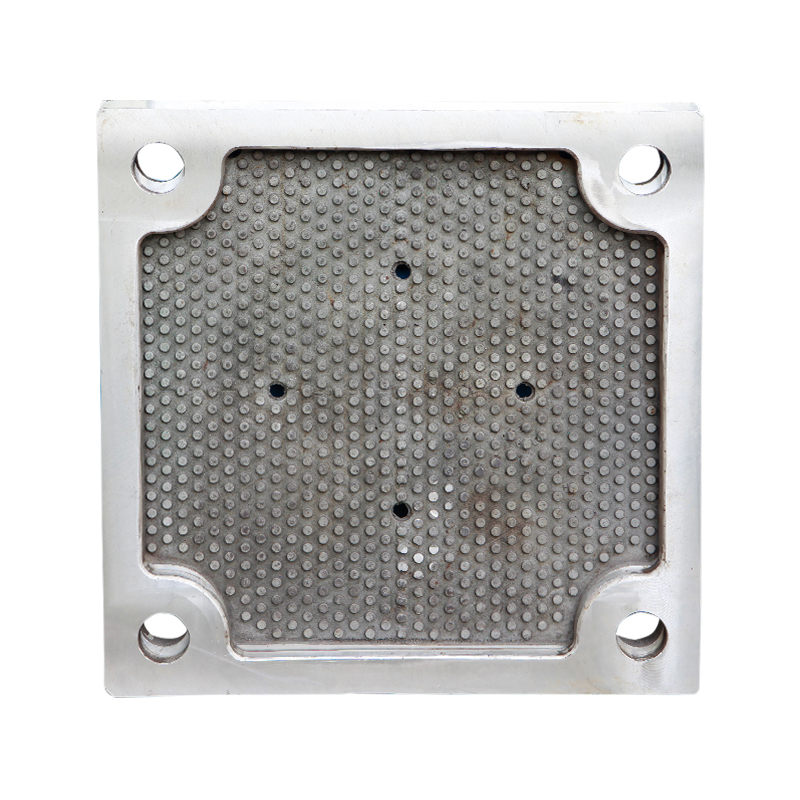
Chamber plates are among the most commonly used filter press plates. They create recessed chambers where sludge accumulates and forms filter cakes during the filtration process.
Advantages include:
- Simple and reliable design
- Suitable for a wide range of sludge types
- Lower investment cost
- Easy maintenance
Membrane Filter Press Plates
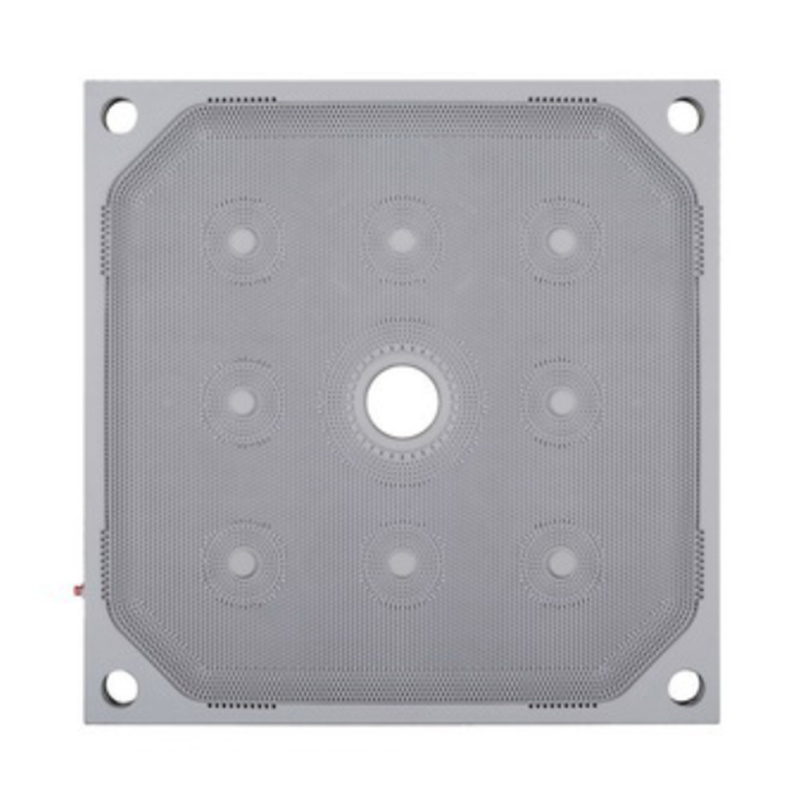
Membrane plates feature an expandable membrane that applies additional squeezing pressure to the filter cake after the initial filtration stage.
Benefits include:
- Higher cake dryness
- Shorter filtration cycles
- Reduced sludge disposal costs
- Improved overall filtration efficiency
Plate and Frame Plates
Although less common in modern installations, plate and frame systems are still used in some specialized applications where filtration flexibility is required.
|
Plate Type |
Main Advantage |
Typical Application |
|
Chamber Plate |
Cost-effective filtration |
General sludge dewatering |
|
Membrane Plate |
Higher cake solids content |
Industrial wastewater treatment |
|
Plate & Frame |
Flexible operation |
Specialty filtration processes |
Choosing the correct plate type ensures the filter press can achieve the desired filtration performance while meeting operational requirements.
Why Is Plate Material Important for Long-Term Reliability?
The material used to manufacture filter press plates directly impacts durability, chemical resistance, and service life.
Polypropylene (PP)
Polypropylene is the most widely used material for filter press plates because it offers excellent resistance to chemicals, corrosion, and wear.
Advantages include:
- Lightweight construction
- Strong chemical resistance
- Long service life
- Cost-effective solution
Reinforced Polypropylene
For demanding industrial applications, reinforced polypropylene plates provide greater mechanical strength and improved resistance to deformation under high operating pressures.
Specialized Materials
Certain industries may require customized materials for handling highly corrosive or high-temperature sludge. Selecting the proper material helps prevent premature plate failure and reduces maintenance costs.
|
Material |
Characteristics |
Suitable Environment |
|
Polypropylene |
Corrosion-resistant, lightweight |
Municipal and industrial wastewater |
|
Reinforced PP |
Higher strength |
High-pressure filtration systems |
|
Customized Materials |
Special chemical resistance |
Chemical and mining industries |
When evaluating plate materials, it is important to consider sludge composition, operating temperature, pH levels, and chemical exposure.
What Operational Factors Should Influence Filter Press Plate Selection?
Beyond plate design and material, several operational factors play a significant role in determining the most suitable filter press plates.
Sludge Characteristics
Different sludges behave differently during filtration. Factors to evaluate include:
- Solid concentration
- Particle size distribution
- Viscosity
- Compressibility
- Chemical composition
Understanding sludge properties allows engineers to select plate configurations that maximize filtration efficiency.
Filtration Pressure
Filter press systems operate under varying pressure conditions. Plates must be capable of withstanding the required pressure without deformation or damage.
Higher-pressure applications often benefit from reinforced plate designs that maintain structural integrity throughout the filtration cycle.
Cake Dryness Requirements
Many facilities aim to minimize sludge disposal costs by achieving higher cake solids content. Membrane filter press plates may provide significant advantages when maximum cake dryness is required.
Production Capacity
Facilities processing large sludge volumes need plates designed to support high throughput and continuous operation. Plate size and chamber volume should align with production requirements.
Maintenance and Cleaning
Modern filter press plates often incorporate features that simplify cleaning and maintenance. Easy-to-clean designs help maintain filtration efficiency and reduce downtime.
|
Selection Factor |
Impact on Performance |
|
Sludge Properties |
Determines filtration behavior |
|
Operating Pressure |
Affects plate strength requirements |
|
Cake Dryness Goals |
Influences plate type selection |
|
Throughput Requirements |
Determines plate size and capacity |
|
Maintenance Needs |
Affects long-term operating costs |
At Jiangsu Sudong Chemical Machinery Co., Ltd., we manufacture high-quality filter press plates designed to meet the diverse requirements of sludge dewatering applications. Our products are engineered for durability, excellent filtration performance, and long-term reliability across industries such as wastewater treatment, mining, chemical processing, and environmental protection.
FAQ
What is the most common material used for filter press plates?
Polypropylene (PP) is the most commonly used material because of its excellent chemical resistance, durability, and cost-effectiveness.
When should membrane filter press plates be used?
Membrane plates are ideal when higher cake dryness, shorter filtration cycles, and reduced sludge disposal costs are important objectives.
How long do filter press plates typically last?
Service life depends on operating conditions, sludge characteristics, maintenance practices, and plate quality. High-quality plates can often provide many years of reliable operation.
Can filter press plates be customized?
Yes. Many manufacturers offer customized plate sizes, feed configurations, materials, and designs to meet specific process requirements.
How do I know if my filter press plates need replacement?
Common indicators include cracking, deformation, reduced filtration efficiency, leakage, uneven cake formation, and excessive wear on sealing surfaces.
Coordonnées
 No. 1, Sudong Road, Guxi Town, Taixing, Jiangsu, Chine
 +86-15720778188
 +86-523-87791016
 +86-523-87797781
 [email protected]

;void(0))